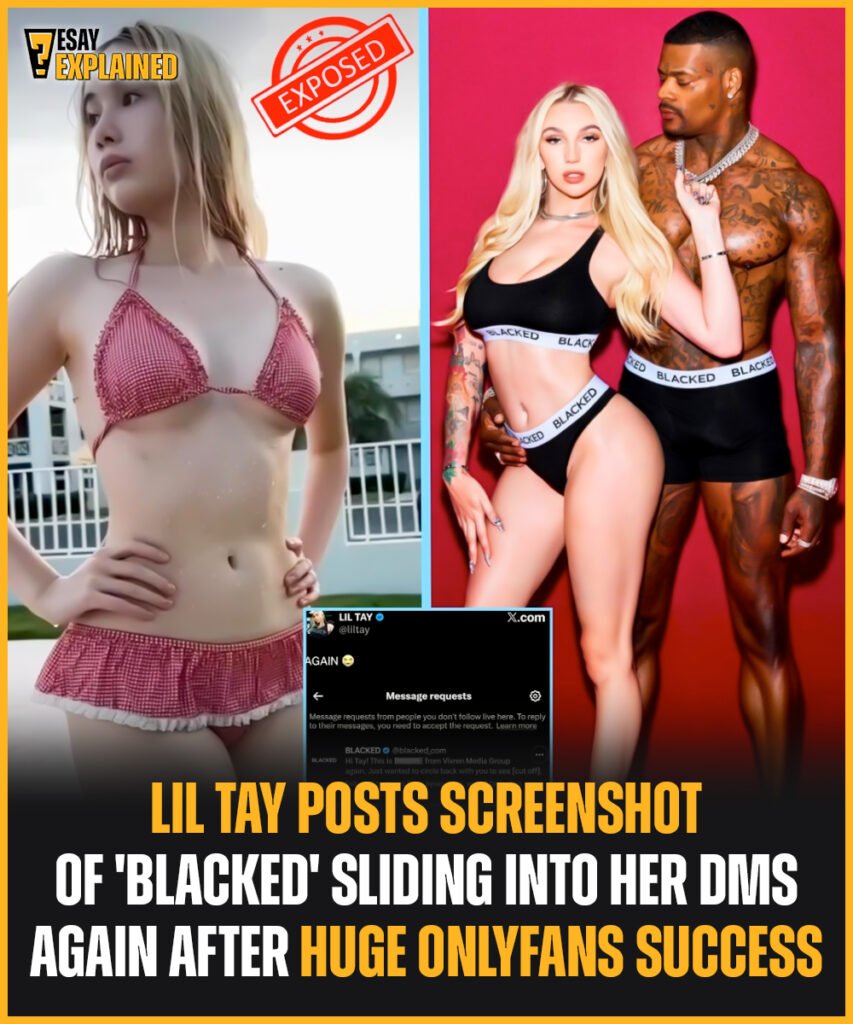
Social media has erupted after Lil Tay reportedly shared a screenshot of an alleged direct message from a major adult entertainment brand, igniting a wave of speculation across multiple platforms. The timing of the post has only intensified the conversation, coming shortly after reports of her explosive growth on a subscription-based platform. Within hours, the screenshot began circulating widely, triggering debates about publicity, strategy, and the evolving dynamics of influencer fame.
The alleged message, which appeared in her message requests, quickly became the centerpiece of online discussion. What made the situation even more intriguing was the implication that this may not have been the first time contact was made. The word “again” sparked curiosity, leading many to question whether previous outreach attempts had occurred behind the scenes.
In today’s digital ecosystem, moments like this can escalate rapidly. A single screenshot can fuel thousands of reposts, reaction videos, and commentary threads. Influencers operate in a high-visibility environment where private interactions can instantly become public narratives. The viral spread of the alleged DM demonstrates just how quickly attention can snowball once social media users sense controversy.
The rise of subscription-based content platforms has dramatically shifted the economics of online fame. Influencers who once relied primarily on ad revenue or sponsorship deals now have direct monetization channels. Reports of Lil Tay’s recent subscriber surge suggest that she has tapped into this model effectively. With strong growth comes increased industry attention, and brands—across multiple sectors—often monitor trending creators closely.
When a personality experiences rapid digital growth, it signals influence, audience loyalty, and purchasing power. Companies, agencies, and media brands frequently reach out to capitalize on that momentum. Whether the alleged DM was a business inquiry, a partnership proposal, or routine outreach remains unclear. However, the public reaction shows that context sometimes matters less than perception.
The influencer economy thrives on attention cycles. Visibility leads to engagement. Engagement leads to traffic. Traffic often leads to revenue. In this environment, even controversy can function as marketing. The public exposure of a private message can generate far more engagement than the message itself ever would have.
There are several possible interpretations of the situation. Some observers believe sharing the screenshot was a strategic decision designed to amplify buzz. Others argue it may have been intended as transparency, showing followers what happens behind the scenes when someone gains significant traction online. In either case, the impact has been undeniable.
Online audiences are naturally drawn to stories that combine fame, money, and unexpected communication. The psychology behind viral content often revolves around curiosity. Viewers want to know what was said, why it was said, and what it means for the future. The more ambiguity surrounding a situation, the more speculation it generates.
In recent years, the boundary between private and public life has continued to blur for influencers. Direct messages, once considered personal exchanges, have increasingly become part of content strategy. Screenshots serve as proof, validation, or leverage depending on the narrative being constructed. The act of posting a DM can shift power dynamics, placing the influencer in control of the storyline.
This event also highlights how rapidly influencer branding evolves. Personalities who first gained attention through viral antics or controversial appearances can transition into monetized subscription models. Once monetization accelerates, external interest often follows. Brands monitor trends closely, seeking partnerships that align with current online momentum.
Critics argue that publicizing private communication can damage professional relationships. Supporters counter that influencers have the right to control their image and disclose interactions if they choose. The debate reflects broader tensions within the digital creator space, where transparency and strategy often overlap.
The term “exposed” has become a staple of online culture. It implies hidden truths, secret exchanges, or revelations. When attached to a trending name, it virtually guarantees engagement. The framing of this situation as an exposure rather than a simple screenshot magnified its reach.
Attention in the digital age is currency. Algorithms reward engagement, not nuance. When posts spark comments, shares, and reactions, they gain additional visibility. The cycle reinforces itself. More engagement leads to more reach, which leads to even more discussion. Within this loop, a single image can become a headline.
The broader cultural significance of this moment lies in how easily narratives form. Without full context, audiences construct their own interpretations. Some assume calculated marketing. Others assume controversy. Many simply watch and react. The power of perception often outweighs factual detail in viral environments.
Subscription platforms have empowered creators with unprecedented independence. They allow influencers to monetize niche audiences without relying on traditional gatekeepers. Success on these platforms can dramatically shift an influencer’s positioning in the marketplace. Growth metrics signal influence, and influence attracts opportunity.
Industry outreach following subscriber growth is not unusual. When audience numbers spike, external entities take notice. Whether the alleged DM was serious, casual, or automated outreach is secondary to the story’s impact. What matters is that the screenshot captured attention at the right moment.
The digital landscape rewards timing. Posts that align with existing momentum often perform better than those that appear in quieter periods. If the screenshot emerged during a peak in subscriber conversation, it would naturally amplify interest. Social media thrives on layered narratives.
Another factor contributing to the virality is contrast. When unexpected industries intersect, audiences react. Cross-industry attention creates intrigue. The suggestion of repeated contact only intensified that intrigue. Repetition implies persistence, which adds another layer to the story.
Influencer culture has matured into a complex ecosystem where branding decisions carry strategic weight. Public posts can signal independence, desirability, or boundary-setting. They can also signal confidence. By revealing outreach, an influencer may be demonstrating perceived value in the marketplace.
The conversation surrounding the alleged DM underscores how quickly attention can be redirected. One day, discourse centers on subscriber milestones. The next, it focuses on unexpected outreach. This fluidity keeps audiences engaged and continuously refreshing their feeds.
Digital fame is inherently volatile. Maintaining relevance requires constant presence. Viral spikes can fade as quickly as they appear. Moments like this extend visibility windows. Even those who were not previously following the story may become aware of the name through trending discussions.
The ethics of sharing private messages remain contested. Some believe brands accept the risk of exposure when contacting public figures. Others believe private communication should remain confidential regardless of status. The lack of clear boundaries fuels ongoing debate.
In many ways, the situation exemplifies modern influence mechanics. Growth attracts attention. Attention attracts speculation. Speculation attracts more attention. The cycle continues until a new story takes its place.
For audiences, the appeal lies in perceived insider access. A screenshot feels authentic. It provides visual evidence, even if interpretation varies. Visual proof carries more weight in viral storytelling than written claims alone.
Ultimately, the impact of the alleged DM may be less about its content and more about its timing. It appeared during a moment of heightened visibility. That alignment transformed it from a routine message request into a trending headline.
As the digital economy continues to evolve, similar situations are likely to become more common. Influencers operate under constant observation. Every interaction holds potential narrative value. The line between private and promotional continues to thin.
What remains clear is that the exposure generated significant engagement. Whether viewed as strategic, accidental, or purely reactive, it reinforced her presence in the online conversation. In an environment driven by algorithms and attention metrics, sustained visibility often determines staying power.
The story demonstrates how modern fame functions at the intersection of branding, monetization, and viral momentum. A single screenshot can reshape discourse. A single post can redirect traffic. And in today’s creator-driven landscape, even a simple message request can become headline news.